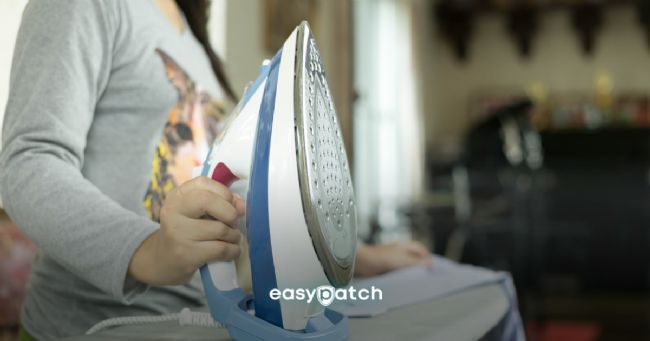
Iron-on patches represent one of the most practical solutions to repair, decorate or personalise clothing and fabric accessories. Thanks to a heat-activated adhesive layer, these patches can be easily applied using an iron or a heat press. However, not all materials react the same way to heat and adhesive. The fabric compatibility is the key factor to achieve a durable and professional result.
Understanding which fabrics work best with iron-on patches helps to avoid common mistakes such as the patch detaching after a few washes or damaging the garment. In this guide by EasyPatch, we thoroughly analyse the most suitable materials, the more delicate ones, and the criteria that help determine when an iron-on patch can perfectly adhere to the fabric.
How iron-on patches work on fabrics
An iron-on patch consists of two main elements. The first is the patch itself, which can be an embroidered patch, printed or made from other materials. The second is a thermoplastic adhesive layer applied on the back.
When the patch is exposed to the heat of the iron, this adhesive melts slightly and penetrates the fabric fibres. As it cools, the glue solidifies creating a stable bond between the patch and the garment.
The final result depends on three fundamental factors:
If the fabric is too delicate or cannot tolerate high temperatures, the adhesive will not activate properly. Conversely, on sturdy materials with compact fibres, the patch adheres more effectively.
Why fabric compatibility is essential
Many users focus only on the patch design and neglect the material it will be applied to. This is one of the most common mistakes.
A fabric compatible with heat allows the adhesive to penetrate the fibres and create a stable connection. An incompatible fabric can cause issues such as:
- patch detachment after washing
Before applying an iron-on patch, it is always useful to check the garment label and verify the recommended maximum ironing temperature.
Fabrics best suited for iron-on patches
Certain textile materials are particularly suitable for this type of application. Their structure allows the adhesive to bond effectively with the fibres.
Cotton
Cotton is the ideal fabric for iron-on patches. It withstands the heat of the iron well and has a weave that facilitates adhesive anchoring.
Patches applied on cotton garments generally remain very durable over time. For this reason, iron-on patches are often used on t-shirts, sweatshirts, shirts and uniforms made from this material.
Denim
Denim is another perfect material for patch application. Jeans are indeed one of the garments where patches are most frequently used.
The density of the weave and the fabric’s robustness allow the adhesive to fix firmly. It is no coincidence that many denim jackets and trousers are personalised with decorative patches or used to repair worn areas.
Mixed fabrics
Many modern garments are made from a combination of natural and synthetic fibres. Cotton-polyester blends often offer a good balance between durability and flexibility.
In these cases, iron-on patches generally work well, provided the iron temperature is not too high. It is always advisable to test the application on a small hidden area of the garment.
Polyester
Polyester can be compatible with iron-on patches but requires extra care. This material tends to react differently to heat compared to natural fibres.
If the temperature is too high, the fabric may deform or become shiny. Using a moderate temperature and even pressure can still achieve a good result.
Fabrics on which iron-on patches are difficult to apply
Not all materials are suitable for application with an iron. Some fabrics have characteristics that make adhesion of the thermal adhesive difficult.
Nylon
Nylon is common in sportswear and technical jackets. This material is particularly heat sensitive and can be easily damaged.
Also, the smooth surface of nylon does not allow the adhesive to penetrate the fibres easily. In these cases, it is often preferable to use sew-on patches.
Waterproof fabrics
Many waterproof fabrics have surface treatments that repel water and prevent adhesion of the thermal glue.
Applying an iron-on patch on these materials may be ineffective or only temporary.
Very thin fabrics
Lightweight and delicate fabrics such as some viscose or thin synthetic textiles may not withstand the heat needed to activate the adhesive.
In these cases, the patch could cause deformations or leave visible marks on the garment.
Materials for which iron-on patches are not recommended
Some fabrics should be completely avoided when using iron-on patches.
These include leather, faux leather, silk and satin. These materials are too delicate or do not allow the adhesive to adhere properly.
If you want to apply a patch on these garments, the best solution is to use sew-on patches or alternative fixing methods.
How to tell if a fabric is compatible
There are some simple methods to assess a fabric’s compatibility with iron-on patches.
The first step is to check the garment label. If the fabric can be ironed at high temperatures, it is very likely suitable for patch application.
Another important factor is the weave density. Thicker and more compact fabrics offer a better surface for adhesive bonding.
Finally, it is always useful to test on a small hidden area of the garment to check the material’s reaction to heat.
How to correctly apply iron-on patches
The application method also affects the final result. Following the correct procedure helps ensure longer patch durability.
To achieve good adhesion it is important to:
- clean and iron the fabric before application
- place the patch in the desired position
- apply heat and pressure evenly
- allow the patch to cool completely
A steady pressure for a few seconds allows the adhesive to penetrate the fibres and create a stable bond.
How to improve the durability of iron-on patches
Even on compatible fabrics, some strategies can make the patch even more durable.
A stitch along the patch edge is an effective reinforcement, especially on garments subject to frequent washing. It is also advisable to wash the garment at moderate temperatures and avoid harsh drying cycles.
These precautions help keep the patch in perfect condition for a long time.
Most common uses of iron-on patches
Iron-on patches are used in many contexts. They are not only decorative elements but also a practical tool to extend the life of garments.
Common uses include repairing worn jeans, personalising jackets and sweatshirts, and creating unique garments with distinctive graphic elements.
Patches are also widely used for uniforms, sportswear and accessories such as backpacks or bags.
Frequently asked questions about iron-on patches for fabrics
Do iron-on patches work on all fabrics?
No. The best results are on heat-resistant fabrics such as cotton, denim and mixed fabrics. Delicate or waterproof materials may not guarantee good adhesion.
Can I apply iron-on patches on jeans?
Yes. Denim is one of the most suitable materials for this type of application. The sturdy weave allows the adhesive to fix very firmly.
Do iron-on patches withstand washing?
If applied correctly on a compatible fabric, they can withstand many washes. Using moderate temperatures helps prolong their durability.
Is it better to sew the patch as well?
In many cases it is not necessary, but stitching along the edge can further increase the patch’s resistance, especially on heavily used garments.
Can I apply iron-on patches on technical jackets?
It depends on the jacket material. Synthetic or waterproof fabrics may not be compatible with the heat needed to activate the adhesive.
Choosing the right fabric for a perfect result
Iron-on patches are a versatile and creative tool to personalise garments and accessories. The secret to a lasting result lies not only in the patch quality but especially in the choice of fabric on which to apply it.
Robust materials such as cotton and denim offer ideal conditions for thermal adhesive bonding. Conversely, delicate or technical fabrics require alternative solutions such as sew-on patches.
Knowing the material compatibility helps avoid mistakes and achieve clean, durable and professional applications. When the fabric is suitable and the application is done correctly, an iron-on patch can transform a simple garment into a distinctive and lasting element.